Episode 7
eXtra Commentary: Dr. Sal Nuñez
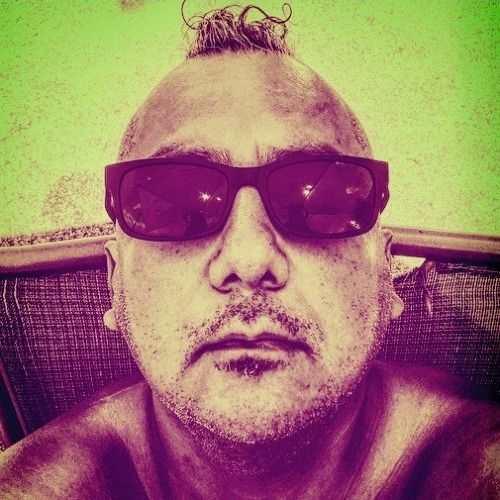
We present an eXtra commentary from Dr. Salvador “Sal” Nuñez on the 5/28/26 live RAMA Blueprints episode “Nuestra Sagrada Salud: Community Mental Health,” recorded at Brava Women for the Arts in San Francisco’s Mission District. Dr. Nuñez, a licensed psychologist and founding director of City College of San Francisco’s Community Mental Health Certificate Program, praises the panel’s focus on La Cultura Cura, and criticizes the governmental systems that overlook culture as healing. He contrasts collectivistic, culturally grounded practices—ceremony, prayer, medicinas and altares—with Eurocentric individualism, shares formative teachings from Puerto Rico, and describes creating a long-running drumming circle at Instituto Familiar de La Raza. Discussing major public health budget cuts, he emphasizes social activism, solidarity, and community support, and offers guidance for new providers on emotional regulation, networks, self-care, leadership, policy awareness, and staying connected to elders and ancestral practices. Dr. Nuñez is interviewed by host Socorro Gamboa.
Please consider donating to the RAMA Blueprints podcast by visiting CARECENSF.org. This episode was made possible through a California Arts Council Impact Grant.
This episode is produced, written and edited by Darren J. de Leon and Socorro Gamboa.
Transcript
Welcome to the Rama Blueprint's podcast. I'm your host, Socorro Gamboa. We are honored to share this space through the sacred lands we stand on, from the Chumash and Kizh/Gabrielino peoples in Southern California to the Ohlone in the Northern California lands. Our guest commentator today is Dr. Salvador Nunez. Dr. Salvador Nunez is a PhD, a licensed psychologist, licensed marriage and family therapist, researcher, community advocate, educator, and consultant. He's a tenured faculty member at City College of San Francisco, and founding director of their Community Mental Health Certificate Program. His work centers on community health, cultural fluency, indigenous medicine, and ceremonial drumming as approaches to healing and wellness. In collaboration with community, Dr. Nunez developed the Medicinal Drumming Praxis, a model that integrates indigenous medicine, behavioral health, and Afro Puerto Rican rhythms.
Welcome, Dr. Nunez. How are you doing today?
I'm doing really well, Socorro. Thank you so much for the invitation to be here. It's a pleasure and honor to be able to have this conversation with you. I wanted to, before having the conversation, to acknowledge our ancestors, right? To acknowledge the sacrifice and the contributions that they all made to open the path to get us all here today. To our elders and mentors, to our community, and to our families for the support and nourishment in making all of this happen, so that we can continue bringing this word to the future generations.
Well, we're excited to be with you también in community, and we're just looking forward to sharing your insight, experience, and your wisdom. I know you have many years of working in community and doing practice of ancestral medicine and working with so many, many different people. I know I first met you at Instituto Familiar de La Raza in a drumming circle as we were both working with specifically the Community Response Network outreach team. So it's good to see you, and it's also good to hear your voice, and always look forward to our conversation.
Likewise.
After listening to the live episode, ' called Community Mental Health, Nuestro Sagrado Salud. Could you comment and give perspective to what you heard in the discussion?
I, um, want to share that the podcast and discussion was very inspirational, and it was really deep in details and in information, that anyone who listens to that podcast will be able to get a sense of the true meaning of cultura cura, and how that is integrated within community to support our members, our community members, in the journey towards wellness and recovery.
There's some number of perspectives that I have that I wanna share. And before discussing that, I first wanna draw the attention to the Substance Abuse and Mental Health Services Administration, SAMHSA. And I'm saying this because they have eight dimensions of wellness, and this organization is a, a reputable organization that is a leading federal organization for the US Department of Health and Human Services. The eight dimensions of wellness are emotional, environmental, financial, intellectual, occupational, physical, social, and spiritual.
I mention those because one of the most important dimensions of wellness is not listed in there, and that is the dimension of cultural wellness. And we can see that as a large federal organization is not thinking of culture as a healing approach to health and wellness, that that trickles down to statewide, to region, and to local organizations of the government who are not considering that particular dimension In terms of health and wellness.
As you know, my wife, Hadit, and I have been talking about this, and we're thinking about how to have conversations with other people so that we can start documenting this, as a wellness dimension itself that we know as community and people that it's important. But I wanted to bring that to the attention of the listeners because, it is in relation to cultura cura.
And if the government is not listing cultural wellness as an important dimension in health, then it means that they are not considering the implications of cultura cura in the work that we do as providers in our communities. So in terms of the conversation, I heard my perspectives was that the panelists, right, all of them- Dr. Lizbeth, Mitzi, and Michelle Alvarez were all on point with what they said, right? And the focus was cultura cura, like the overarching perspective was cultura cura. Um, I heard them, you know, culturally centered and grounded practices that liberate, empower, and heal, right? This is cultura. Importance of cultivating community health and community-based collective actions. The conversation also talked about fostering and nurturing providers that are culturally affirming and adaptable, how oppression is embedded within the colonialistic systems, and self-care and sustainability.
And as I listen to all the different topics that I am mentioning now as themes, I found that the conversations were very, thoughtful, and very indicative of the experience that individuals who have been mentored by elders in community, how they move in working with our population in a way that empowers and leads to health and self-determination.
So, in terms of cultural centered and grounded practices and how they liberate and empower people, we know that we are working in our community as a collectivistic society. And the systems that we talk about are coming from a Eurocentric individualistic perspective. So just right off the bat, they do not intersect, right? They are parallel, but one is focusing on the individual and the other one is focusing on the collective. And the difference is that in the collective perspective of health and wellness, when we're talking about cultura cura, we're bringing in all our ancestral wisdom, right? We're bringing in ceremonia, ancestral wisdom, prayer, temezcal, music, dance, symbolism, altares, all these things that represent who we are as a people, which in an individualistic society, none of that is considered. They're not thinking about how all these factors are critical for our wellness and health because they are part of the expression of culture.
And culture shapes us, right? It shapes our mind. It molds our identity. It forces belonging, and is inclusive of language, values, beliefs, morals, rules, epistemology, and all these different things that when we are talking about cultura cura, all of these elements that I mentioned are embedded within that, as opposed to a treatment approach that is individualistic and that is only focused on interventions for the person.
So I heard the panelists speak about that in a way that was very descriptive and that gave the listeners an opportunity to know and learn how to practice these principles when they are interacting with our community members.
When we spoke with Dr. Concepción Saucedo, Concha, one of the co-founders of Instituto, she mentioned that instead of just looking at it as community mental health, to look at it as overall health, community health. Because you can't just treat one part, you have to look at the entire person and the entire community.
I guess I wanna just dive a little bit deeper into, like, asking, when you listen to what they're saying, each one of 'em mentions at one point, How they took their own personal journey into transitioning into doing this work. And what they brought from what they were taught. Can you share a little bit about, when you were in Puerto Rico growing up, some of the things maybe you saw that led you into community health.
Mm-hmm. Yes, thank you, Socorro. I was born in New York, but I was raised in Puerto Rico. And I was raised in a small community that is four blocks by four blocks, so everybody know, knows each other still till today, right? Wow. I go and visit my sister, and I know a lot of folks there. So, as I was growing up, we know that the power grid in Puerto Rico is deficient, right? It doesn't work as it should. And at night we would lose power. And I could see the edge of the Milky Way. I would look up into the sky, right? Uh, at seven years old I started living in Puerto Rico, and I could look up into the sky and see the edge of the Milky Way. And my abuela, my grandmother used to tell me, "Mijo, we are part of that," right? "We are part of that, and we are stardust. We are made of stardust." And you know, at seven years old, I really didn't understand, like, what she was talking about. But I remember also going to the yard where she would work on medicinal plants. She would have a lot of medicinal plants, and that's one of the reasons I try to use these plants as well. And she would tell me, "Whenever you feel angry or you feel upset about something, work with the earth," right? "Touch the earth with your hands. Allow your energy to flow into the earth, and receive that energy from the earth." My grandfather, he was part, of the indigenous people of Puerto Rico, the Taínos. And we used to go to some sacred locations where the Taíno had carved petroglyphs. Particularly like in a riverbed where there would be some petroglyphs on the rock, and then they would be reflected into the water. And he would tell me that this represented the duality of life, the spirit and the material. That the material was the rock where the petroglyphs were carved on, and the spiritual was the water where they were reflected. And when you tried to hold them, you couldn't because it was water. So you couldn't see spirit, but you could feel it. You know, you can feel it. I grew up with these teachings from my grandparents and from my mother as well. As a young man, I ended up going to military service because I felt that it was a way for me to project and, and release anger that I had as growing up as a young man, which I can relate to some of the folks that I have worked with in the community. The, the pain, right, that we experience as we're growing up and how that comes out.
After I came out of the military, I was in a journey seeking how to reestablish myself back into civilian life and not knowing exactly how to go about doing that. And I remember that one day I was meditating, and it just all of a sudden hit me that I needed to reconnect with my culture. And I decided to continue seeking, you know, cultural learnings from individuals, who were versed in that and who were cultural holders. And I went to study music because I felt that music was medicine, right? And we know that music is medicine. There are many medicinas, and music is one of them. And I studied music, and I came to San Francisco because my mother was living here across the street from RAP, And one of my brothers went, went to RAP in the '80s. And I remember that I started seeing what was happening in the community, and also because I had grown up in a home where there was, violence. I wanted to understand a little bit deeper why people would become violent, even though I understood that part of it was injury and, and anger.
was the executive director in:And then I continued working at Instituto for another approximately 15 years where I was running a drumming circle every Thursday night with young men. And we would have at times, uh, five, and other times we would have 25. And that led to me being interested in how the drumming was a tool of wellness and health, and how all traditions in the world, that I know of anyway when I was doing my research, have some sort of drum, right? Where they gather together in circle. They use medicine. They use sacred medicine plants. They use music. They use song and dance to be able to relieve and release that energy that accumulates as we move through life and experience injury.
So then from there I went to work at City College, and I found myself in a place where was definitely colonialistic in nature, right? Of the mentality of sitting people in rows and looking at the back of everybody's head. And I walked into the classroom, I said, "All right, let's do a circle." Right? "We're gonna do a U. We're gonna do a circle. We gotta see each other. We gotta be able to connect with each other." And I found myself bringing in popular education, creating a space where people were learning from each other as opposed to me top-down giving and feeding people information.
And based on relationship, on love, on empathy, on, uh, mi otro yo, right? Seeing myself in the other and treating the other with the love and the respect that I wanted to be treated with, and that I know that every human being deserves. And now that's led to where I am now, you know? So that's in a nutshell, like, the trajectory of that journey.
I just wanna dig in a little bit. the podcast is deeply rooted in oral history and community empowerment. When we're looking at the institution of public mental health and its practices, how does La Cultura Cura, the blueprint rooted in ancestral medicine impact the historical and institutional structure of community health and its practices for individual mental health?
Well, the parallel between public mental health and, Cultura Cura is very broad in terms of being in opposite ends. And one, you have a system that is based on colonialism, and colonialism by nature inherently oppresses our communities. Where when we're working from a cultura cura, we're liberating our communities. So we have these two poles, one is oppression and one is liberation. Now, whether the system is consciously doing that or unconsciously, it has a difference, a different meaning. However, it has the same result, right? And the result is that we find our people oppressed with lack of resources and in positions that are discriminatory in nature.
Where we're looking at cultura cura and historically how it has been used, it's a movement of liberation, right? Through all the things that we've mentioned, through the connection of our identity. When I know who I am, when I know where I stand, when I know who came before me, and when I'm connected to my lineage, I walk with power. I may be alone, but I do not walk by myself. I am walking with all those who came before me. So identity and teaching our community the connection to identity is very important. You know, I frequently told young people there's a mural in Instituto where estan los templos, where people call piramides, right?
Right, right, right. And I told them, "Do you realize that this is part of your DNA?" That the knowledge that was needed and utilized to create those sacred temples that are aligned to the cosmos required a high level of intellect and connection to the universe, and that lives within you right now. All you need to do is reactivate that DNA, and all that knowledge will be at your disposition, right? That ancestry that we have, the community, the connection to spirituality, the collective belonging. All these things are just so powerfully healing and therapeutic and are at a whole different spectrum than the individualistic perspective of therapy within the systems of public health.
also, you know, we love people. And one of those five principles of RAP is love and serve the people. Right? And we love and serve the people. When we serve the people, we are serving ourselves because eres mi otro yo. So if I'm serving you, I'm serving myself. You know, the self-determination, the social activism, the de-institutionalization of institutions, and institutionalization of funding for new systems. Right. Right? This is all the things that need to happen. Learning and moving, treating others with dignity and respect. These are all things that it signals, "I see you, I hear you, and you are important in this world." Where a lot of our injury comes from being discriminated, from being oppressed, from not being seen and not being heard. So our cultura cura counters all those injuries that we experience in a system that is by designed to keep us down and to oppress us. And I know those are strong words, but that's how it is.
Yeah.
That's how it is, right?
We gotta call it, we gotta call it what it is. You know, in the conversation with the panelists, we slightly touched on, you know, unfortunately the huge budget cuts that are happening in San Francisco. And one of those departments is public health. You know, something like $60 million major cuts that are coming down the pipe. And oftentimes the organizations, the nonprofits, the clinics are the most impacted. What are you doing to sort of integrate, to prepare, to get folks ready, to work in this field, to keep them motivated? And, what are your thoughts on that?
You mentioned earlier that you and your compañera, Edith, know, did a workshop with the public health about some of the strategies that you're building, around sustaining this work. Is there some thought you have on that, and specifically what should clinics do? How can we move? What are some of the strategies that could be built around that?
Yeah. This is a lot because it always comes down to how do we as people sustain the work that needs to happen without the resources from the system. So it becomes overwhelming. But you know, we have survived, right? We have survived many different things. Mm-hmm. and we're still here, and we still move forward, and we're still having beautiful children, and we're still influencing the world in many different ways. So the cuts are devastating. they are impacting institutions in our communities that have proven to be able to support community in the way that is meaningful to community towards achieving health and wellness. The system contracts these organizations because they know that they can do the job that the system is unable to do. And yet, you know, there are cuts that are happening. These cuts apparently in my understanding, they're coming down from the federal administration that definitely is not in favor of us living a quality life, and then it trickles down into our communities.
One of the things that at least we're doing, that Edith and I are doing, and that I heard, uh, that other folks are doing in the community as well is, we have to engage in social activism and social advocacy. Because if I'm gonna get shot, I'm gonna make a ruckus before I get shot. I'm not just gonna go down getting, "Okay, well, they're gonna shoot me, and I'm not gonna say anything." It's like, "Hell no. I'm gonna make a ruckus," right? So the analogy is that if we're gonna be impacted, I'm gonna advocate for that, right? I'm gonna organize. You know, one of the things that we've been doing is we're organizing students. We're calling upon folks who are 📍 like-minded. We're going and sending, um, messages to the board of supervisors, meeting with folks. You know, we're going to rallies and conversations with organizations and just taking action, you know, trying to get the community involved in movimiento, right? In action so that, the system realizes that we are still here and that we are going to resist the oppression that is placed on us through lack of financial resources, right? So these are things that require what I mentioned, social activism, social advocacy, and the ability to bring people together.
One of my visions, Socorro, is what you're doing in a different way, right? I saw that you have a podcast with the Samoan community. That you have a podcast with different groups of individuals, and I think that the solidarity that we are able to develop with other communities is... It fortifies and nurture us, nurtures us. And even if we are unable to get the funding, we know that our integrity remains intact because we did what we needed to do. We supported other communities, and we had other communities support us. And we have learned to move forward with the little resources that we have even though it's very unfair. We know that our community members are going to share a little bit with each other. Mi abuela siempre me decía, my grandmother always told me, "When someone comes to your house, even if you just have a little bit of food, you share it with them," right? You share it with them. And I know that those principles are embedded in our culture because they are powerful, and that our people will do what they need to do to be able to continue, networking and supporting each other through these difficult times.
Mm-hmm. Yeah. Thank you for those words.
There is a new generations of young people that are, you know, they're graduating and they're coming into this work, and they decide this is the route they wanna take. . I think that young people need to hear what's, kept people like yourself, like myself motivated, and what, what words of wisdom would you share with them?
Yeah, thank you. This is real hard work, and it requires a lot of spiritual fortitude.
I believe that we come to be of service to others, and that happens in many different ways. At the community level that we're talking about in terms of the work that we do as providers, it requires to understand that when I'm helping someone else, I'm helping myself, and I'm also helping future generations.
You know, when we're speaking about families and youth, we're talking about future generations, Socorro, as you know, that an action that I take right now will have ramifications for eternity. Because even if I don't see it, right, it will have that type of ramification. So to be mindful of living a life that really you decide to, with conviction, to give yourself to it. I, I do have some things that I wanna share in terms of what people might be able to do to sustain that work, right? In my learning as a young man, I really had to go through a process to learn emotional regulation. You know? And I think that when we're doing this work, it's important to learn how to and practice emotional regulation so that we can deal with all the adversities that are gonna be be coming our way.
To develop and utilize a strong social support network, that's gonna be really critical for the young people coming into it. Practice self-care, and view challenges and crisis as opportunities for growth, maintaining a problem-solving, solution-focused mindset, right? These are internal things that it's important, in my opinion, to be able to nurture, develop, and foster.
As we're working within these systems, it's important to stay up to date with the policy, to learn from the system, and learn how the system functions, so that we are able to move within it in a way that is successful. For the younger people and those of us who have been doing this for a while as well, is to continue developing your leadership skills and learn community organizing, bringing people together. Remain innovative. Stay connected to culture, traditional medicine, and ancestral healing practices. Consult with your elders for guidance, wisdom, and truth. And to be able to enjoy the journey, because there is a lot of positive growth that comes out of doing this work, which involves a lot of sacrifice.
So those are some of the things that I would recommend for younger people, to be able to, sustain their work as they're moving through community engagement and involvement.
Well, I wanna thank you so much for those words, and gracias de todo corazon.
Socorro, can I tell a quick story? Yeah
Yeah
maybe
Go ahead.
Okay. How this might relate to, to the young people. So not long ago, there was a little butterfly who thought it could not create any change in the world because it couldn't even fly straight. And one day, that butterfly landed on a little flower and started to flap its wings.
And as a result of the flapping of the wings, a little bit of pollen came up into the air, and there was a gazelle standing next to the flower. And the pollen went into the gazelle's nose, and the gazelle went, "Achoo!" And there were a million water buffalo standing nearby, and they began to run and run and run and run, and a huge cloud of dust was formed, and it went up into the air.
And Grandfather Wind came along and moved that cloud of dust over the Atlantic Ocean. And because the temperature between the water and the cloud changed, the wind began to spin and spin and spin, and a hurricane was born. And the hurricane moved over South Florida during the time of the harvest of the oranges, and it destroyed all the fields. And the people who were going to harvest the oranges no longer had a job. Those who were gonna take the oranges from the field to the factory no longer had a job. Those who were gonna work in the factory to turn the oranges into orange juice didn't have a job. And when we went to the supermarket to buy orange juice, there was none on the shelf. And this was all because a little flapping of the wings of a butterfly who thought it would not create any change in the world. So imagine you, imagine you as a young person, as anyone who shares word medicine, the impact that you could have on individuals through your intelligence, through your ambitions, through your contributions to the community.
If a little butterfly was able to do that with the flapping of the wings, imagine what you could do with your words and your presence. And that's something that I would like to let young people stay with. So gracias.
Whoa. Um, we truly appreciate you spending time with us. May you continue with good health, sound mind, and walk firmly with your feet planted on the ground, and always with a lot of love and respect, Sal, for just who you are and the work you have been doing and how you've inspired so many generations of young people, and the generations of the future to come. I always feel like it was a blessing to meet you at Instituto and appreciate the work that we did together for those young men and, the young women that we're doing outreach on. I, I really value that friendship we have. So you have been listening to the RAMA Blueprints podcast.
Thank you to our guest, Dr. Salvador Nunez, and him sharing his personal story, his wisdom. We hope you continue to support and sponsor the podcast. Thank you, gracias.
📍 📍 Thank you for listening to this extra commentary. We want to thank Dr. Salvador Núñez for his commentary. We also extend a special thank you to our fiscal sponsors, Brava! for Women in the Arts and Cares in San Francisco, and a special gracias to Instituto Familiar de La Raza, United Playas, SALT, Horizons Unlimited Incorporated, the California Arts Council Impact Grant, and the individual donors for their vital support. You can contribute to the podcast and listen to all archived episodes of Rama Blueprints by visiting godssnsf.org or wherever you listen to your favorite podcast. and Remember, 📍 To listen is to heal. 📍 All power to the people 📍